
Finding Ramsey County Residents
No single public file lists every member of a Ramsey County household. The best first step depends on what you already know. A current address points straight to the parcel and tax records. A full name can be tested against property, court, business, and historical sources instead. Old Saint Paul addresses may work better through a directory volume. A map may serve better than a current lookup. Sort every result by what it actually proves. A tax record names an owner or tax name, not each person at the address. A deed documents one recorded transaction. A court file names parties and case activity. Those distinctions keep a residents directory search from turning a likely match into mistaken identity. Access limits and record types matter as much as the name itself.
- Confirm the address, parcel, and legal description in county property sources.
- Save the owner or tax name, then check recorded instruments in RecordEASE.
- For a person, search MCRO with name variants and compare the case details.
- For an earlier household, use library and FamilySearch directory material.
- Ask the responsible office for existing public data when an online index ends.
Note: A matching name is only a lead until the address, the date, and the record type all agree.
Ramsey County Resident Records Offices
Property offices anchor most address work in Ramsey County. The Recorder and Registrar of Titles holds real-estate instruments and ties them together through RecordEASE. The Assessor and property-tax services then link a parcel to its current tax record. Elections handles local voting administration. MNVotes is the state route for checking your own registration. Each office holds different evidence, so their results should never be treated as interchangeable.
Ramsey County Recorder
Recorder and Registrar of Titles
Saint Paul, MN
651-266-2050
Ramsey County Assessor
Property valuation and classification
Ramsey County, MN
Verify current contact with county
Ramsey County Parcels First
Start with MapRamsey when the work begins from a place. The county's public map layers tax parcels, classifications, valuations, current and historic aerial imagery, oblique views, environmental data, administrative boundaries, and points of interest in a single view. Find the parcel first. Then preserve the PIN and legal description before moving on to a tax account. A recorded deed can come after that.
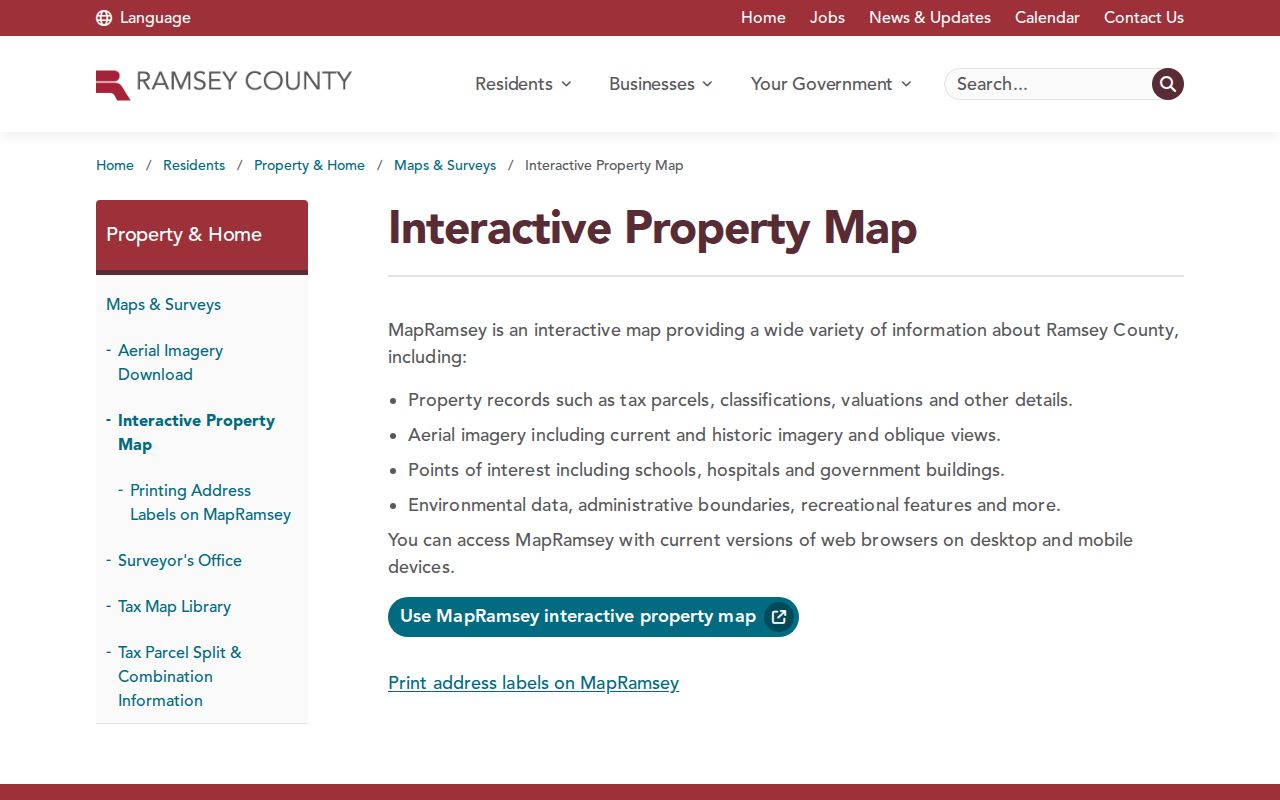
The parcel view adds spatial context but names no residents. Its mailing address, situs address, and legal description may each describe a different part of the same property record.
Ramsey County Property Search Fields
The property-search routes accept several starting points. Use an address when the place is known. Use a PIN when an earlier result supplied one. Plat, block, and lot information works when an old deed relies on a legal description. One legacy search path also accepts any part of the name on a tax statement, so verify the returned parcel before trusting the tax name.
| Field | Format | Ramsey County use |
|---|---|---|
| Property address | Text | Find and confirm a situs address |
| PIN or parcel number | County identifier | Move between map and property account |
| Plat, block, lot | Legal-description fields | Bridge a subdivision or older record |
| Name on tax statement | Text | Find a tax-name lead, not household proof |
- Parcel or PIN
- The county identifier for a taxed property.
- Situs address
- The physical location of the parcel.
- Index
- A finding tool that points to a record; it is not always the image.
- Criss-cross directory
- A historical directory arranged from address to occupant.
RecordEASE Links Names to Land
Once the parcel is confirmed, the recorder's RecordEASE service turns a name or legal description into deeds, mortgages, liens, plats, and related instruments. Grantor and grantee searching works well in reverse. Find the current owner's acquisition, and note the seller and the legal description. Then run that seller as an earlier buyer. Addresses are only leads. Lot, block, addition, and parcel changes control the chain. Basic web search and viewing carry no extra charge. The subscriber schedule lists $25 per month, $0.85 for a document or certificate search, and $1 per viewed document, certificate, or plat. Electronic recording began April 24, 2014. Older instruments may still require deed books, tract indexes, county staff, or library and archive routes. The RecordEASE search surface displays the county book, page, and document-retrieval path.
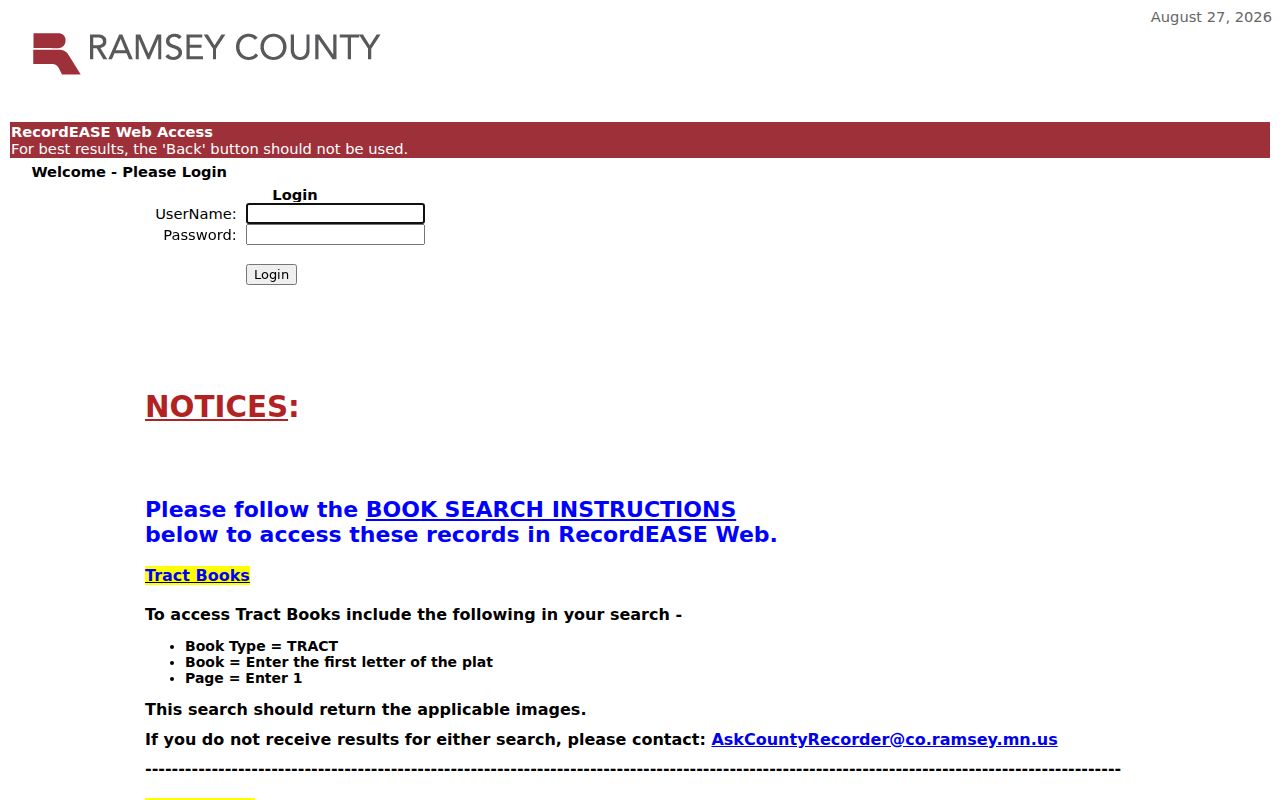
Use the index to find the recorded item, then read the instrument itself before describing any transfer or relationship.
Ramsey County Voter Data Limits
MNVotes lets a person check registration and voting information. It is not a Ramsey County street census. Minnesota Statutes §201.091 governs the public information list. The law allows specified fields for eligible users. Users must identify themselves and certify a permitted use. Exact birth dates, email addresses, and identification data stay private. The same statute bars posting a public voter list in an Internet-searchable database. It also restricts the list's sale, transfer, and use. Safe at Home, withholding, and inactivation options mean a name may not appear at all. Treat election material as a narrowly controlled record, not a general residents directory. Minnesota's registration lookup remains the official personal-verification route.
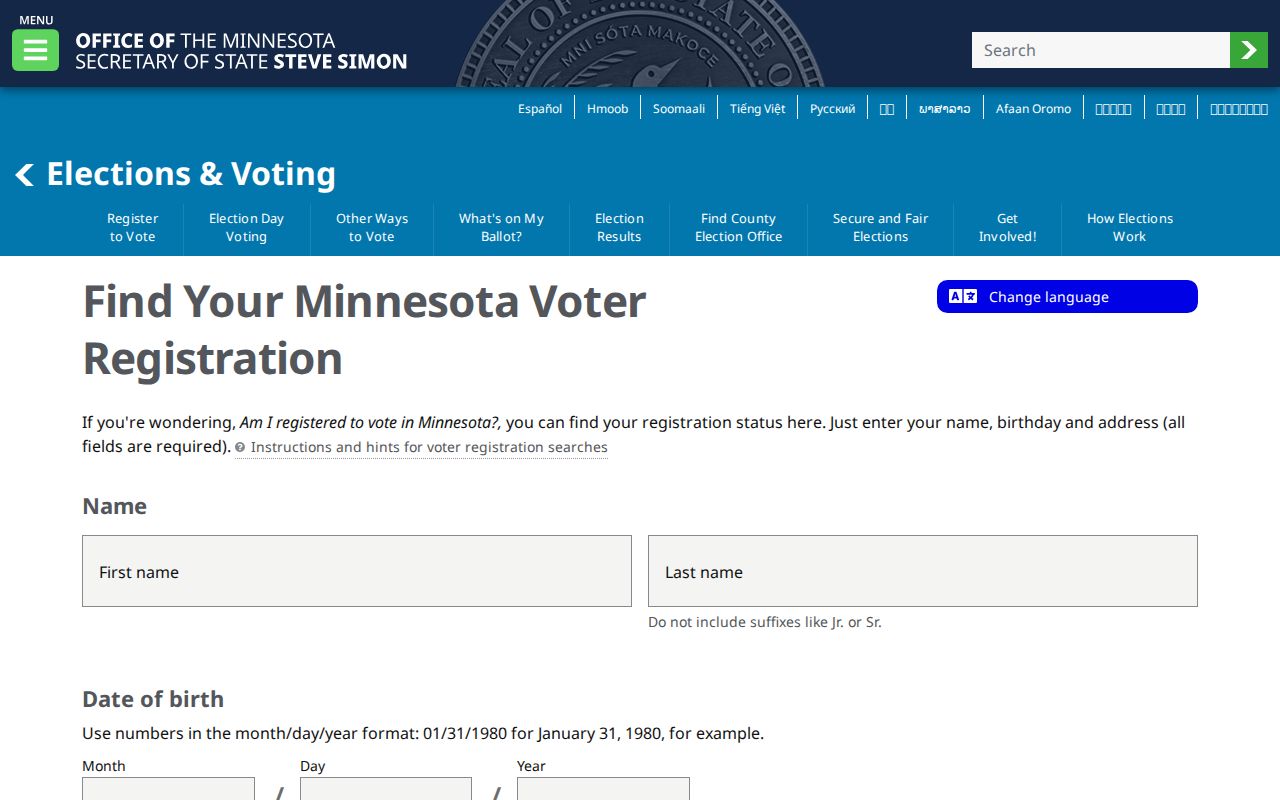
The state form verifies one individual's registration; it does not open a block-by-block roster of Ramsey County streets.
Current Ramsey County Resident Directories
Current sources are specialized, not universal. A tax account ties a name to a parcel. The recorder lists parties to instruments. Court files identify parties and case events within public-access rules. Voter material is the strictest, and the table pairs each Ramsey County residents directory question with the source that can actually answer it.
| Source | What it can confirm | Keeper | Access route |
|---|---|---|---|
| Property tax and value record | Owner or tax name, parcel context | Ramsey County | Public property lookup |
| Recorded instrument index | Grantor, grantee, legal parcel, date | Recorder | RecordEASE and older-record channels |
| Court case record | Party, filing, case activity | Minnesota Judicial Branch | MCRO or courthouse terminal |
| Voter public information list | Statutorily allowed fields | State and county elections | Restricted request under §201.091 |
| Business or license record | Public affiliation or filing | State agency or board | Official portal |
Verifying a person takes a different path. The Ramsey County resident lookup process compares these sources while accounting for aliases, same-name matches, and protected records.
MCRO Remote and Courthouse Records
Minnesota Court Records Online is known as MCRO. It is the state courts' search platform for cases, documents, hearings, and judgments. A public result can surface a case number. It also lists the case type, court location, party role, and filing date. It shows Register of Actions entries, hearing details, judgment information, and public documents. Keep the limits in mind. A case type alone proves nothing about outcome. Certified copies come only from court administration.
Remote name searching is narrower than a courthouse terminal. Pending criminal, traffic, and petty-misdemeanor matters without a conviction stay out of defendant-name case and hearing searches. Remote results also omit party street addresses and protected categories. For a Ramsey County residents directory lookup that turns on spelling, search with and without a middle name. Try a wildcard after two characters, or use Sounds Like. Then pivot to a case number or a terminal whenever official instructions call for it.
MCRO public access is the live statewide court-search platform.
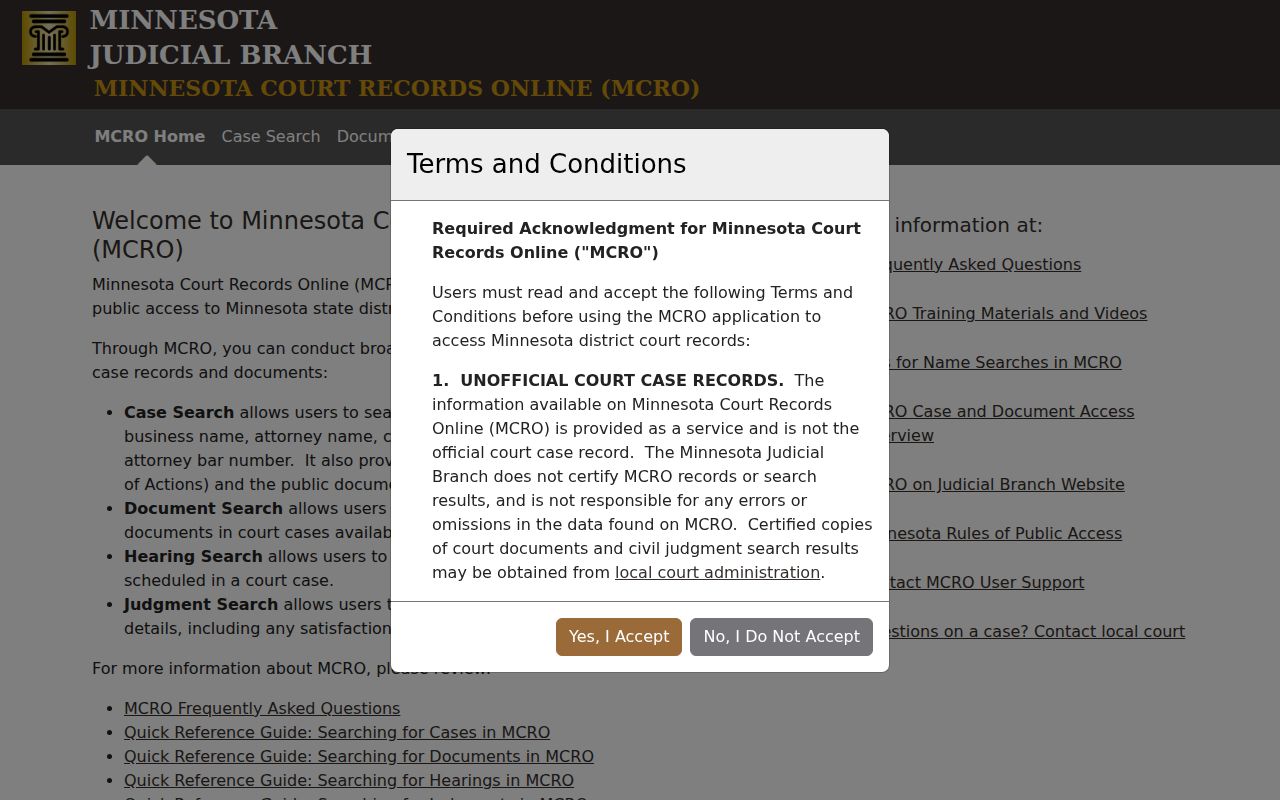
MCRO took over from MPA Remote in 2023, after search features rolled out in phases during 2021 and 2022. That history explains why older directions still point elsewhere.
Ramsey County Vital Record Routes
Vital records sit with different custodians. The Minnesota Department of Health manages statewide birth and death products. Ramsey County Vital Records issues local ones. Marriage certificates come from the county that issued the license. Divorce decrees come from the district court that granted them. The Minnesota Official Marriage System is a discovery index only. It is never a substitute for the licensing county's certificate.
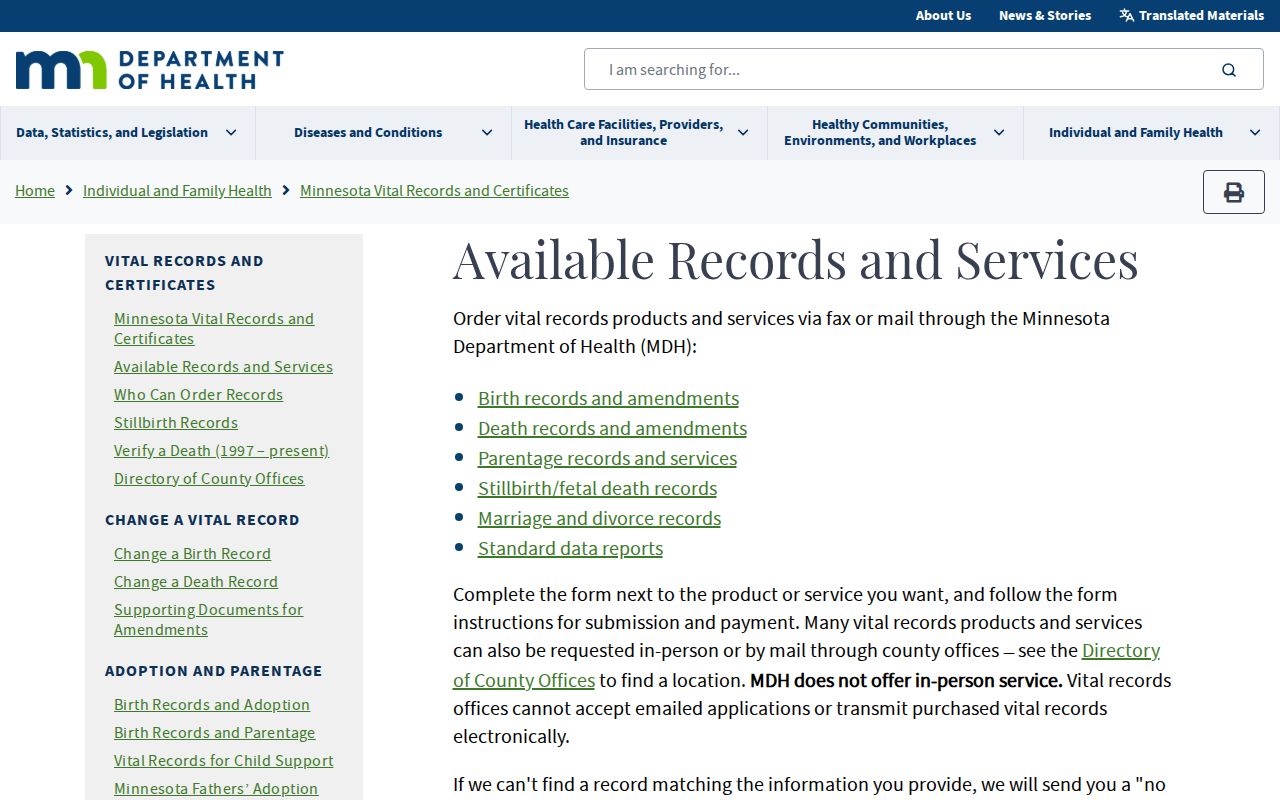
Ordering a birth or death copy takes a signed request, payment, and identity or attestation. It also requires an eligibility category under Minn. Stat. §144.225. MDH accepts mail or fax. It does not take email applications or in-person visits. Its service page publishes processing information. A county vital-record office may offer a local in-person or mail route for the same records.
MDH's product and application page lays out the available birth and death request choices.
Family researchers get a different route. Minnesota People Records Search opens historical index access for births from 1900 through 1934 and deaths from 1904 through 2001.
Saint Paul’s Historical Resident Shelf
For earlier households, the Gale Family Library in Saint Paul anchors local history research. Walk in and the shelves open up. You can use genealogy databases, the 1895 Minnesota State Census index, Digital Sanborn maps, newspapers, county records, and Minnesota vital indexes. The FamilySearch St. Paul catalog leads to directory books and related holdings. Ramsey County Historical Society rounds out the shelf with photographs, manuscripts, maps, and subject files.
A printed street directory packs a lot into one entry. It can list a surname, given name, spouse notation, occupation, employer, and street address. Each volume is an annual snapshot, though, not proof of legal residence. Read the abbreviation key in the front of the book. Search surname variants as well. Then pair a directory year with census, map, obituary, or deed evidence before trusting it. The fuller treatment of these volumes sits in the Ramsey County Directory Book.
The FamilySearch catalog remains a documented route to Saint Paul directory material.
The catalog earns its keep when a needed year falls outside a digitized run or requires an affiliate-library visit.
Ramsey County Custody Window
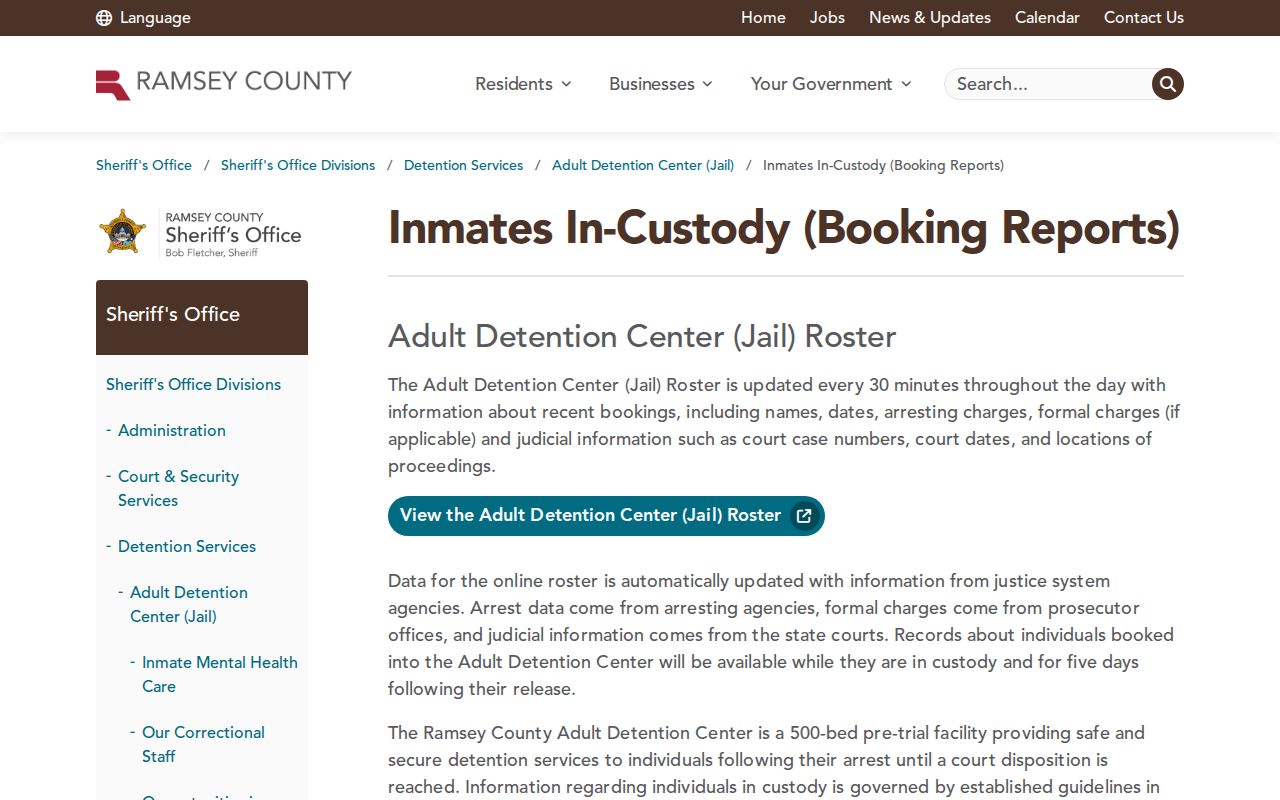
The Adult Detention Center roster is a time-limited custody record, not a general resident lookup. Ramsey County refreshes it every 30 minutes. Coverage runs from people currently in custody through five days after release. Fields include first and last name, age, and booking number, plus booking, charge, court, and proceeding information where available.
The county custody-report page describes this publication window.
Booking data shifts and never establishes a conviction. Turn to the court record for case status and formal outcomes.
Chapter 13 When Searches End
Minnesota's Government Data Practices Act, Chapter 13, lets anyone request existing public government data from the responsible authority. It also classifies private and nonpublic data. A strong request names the record and the date range. It should also state the format and the office likely to hold it. Asking for an existing permit file, tract-book entry, or older municipal record works far better than asking an office to build a new resident list.
Ramsey County spans Saint Paul and many suburbs. Among them are Arden Hills, Falcon Heights, Maplewood, New Brighton, North Oaks, and North Saint Paul. Write down the legal municipality, mailing city, ZIP, county, and precinct separately. Those labels can diverge. The wrong custodian makes a valid search look empty, so pin the municipality before searching any residents directory.
Ramsey County Search Checks
Official sources and commercial people-search sites do different work. An official parcel account shows the tax name and the legal property context. A recorded instrument proves a document was filed. A court docket shows case events, within public-access limits. A commercial profile may blend public records with marketing data, yet it can run stale, merge people with similar names, or strip away the custodian's limits and context. Treat it as a lead, never as the record itself.
| Official record route | Strength | Limit to remember |
|---|---|---|
| County parcel and tax record | Connects property to a current tax name | Does not list every occupant |
| Recorded deed index | Shows a documented land transaction | Older material may need an office or archive route |
| MCRO or court terminal | Shows public court activity | Remote results omit some cases and addresses |
| Library directory collection | Places a household in a historical year | Requires a second source to confirm identity |
When two records disagree, ask which office created each one, when, and what it was meant to document. A signed application, official copy, or custodian response outweighs any search-result snippet. For a correction, contact the office that owns the record. Copying disputed data into another system fixes nothing.
Ramsey County Historical Directories
Old directories open doors that modern records cannot. Ramsey County's paper trail starts early. Newson and Barton printed a Saint Paul directory in 1858 and again in 1859. St. Paul volumes survive for 1863 through 1871 and 1873 through 1924. The Dual City Blue Book covers 1885 through 1923. Polk directories appear from 1885 onward. MNHS holds Ramsey civil case files from 1858 through 1902. It also holds criminal files predating 1953. Together these collections let you push address research back decades. No modern residents directory stops anywhere near that far.
Know which kind of volume you are holding. A standard city directory runs from a name to an address. A reverse or criss-cross directory runs from an address to its occupant. Exact local reverse-directory year runs are best confirmed at the shelf or in the catalog. Present-day households on an entire street need current sources. The property and map route in the Ramsey County Street Directory beats trusting an old volume to mirror who lives there now.