
What a Ramsey County Resident Lookup Can Verify
Ramsey County records are strongest when each source is used for its own purpose. A parcel record can connect an owner or tax name to a physical location. A court entry can document a party role and case event. A vital index can help identify an event, while a certificate remains a custodian-controlled product. The resulting trail is evidence to compare, rather than a single definitive profile of a person.
| Record | What it can confirm | Where | Access |
|---|---|---|---|
| Parcel and tax record | Tax name, situs, mailing address, parcel and classification | MapRamsey | Public web; not a household roll |
| Recorded instrument | Transaction, legal parcel and grantor or grantee | Ramsey Recorder RecordEASE | Public, subscriber, and older-record routes vary |
| Voter record | Personal registration status or specified public-list fields | MNVotes | Personal lookup; public list restricted by statute |
| Court docket | Party role, filing, events and public documents | MCRO | Remote result limits; courthouse terminals are broader |
| Vital, business, or license record | Event discovery, entity affiliation, credential status | State and county custodians | Index and copy rules differ by record |
When the known fact is an address, begin with the parcel and preserve the difference between the physical situs and the tax mailing address. When the known fact is a case number, use that complete number. When an event is the clue, identify the correct custodian before ordering anything. The comparison gains reliability when a second official source independently supports the same person, date, or place.
Run a Ramsey County Resident Lookup Against MCRO
Minnesota Court Records Online, or MCRO, has Case Search, Document Search, Hearing Search, and Judgment Search. Case results can show the case number, type, court location, parties and party roles, filing date, Register of Actions, hearing information, judgments, and public documents. A docket is the court's running list of filed events. It is useful for confirming a case trail, not for assuming that people with the same surname are the same person.
The MCRO search pages show the public search options used in the statewide system.
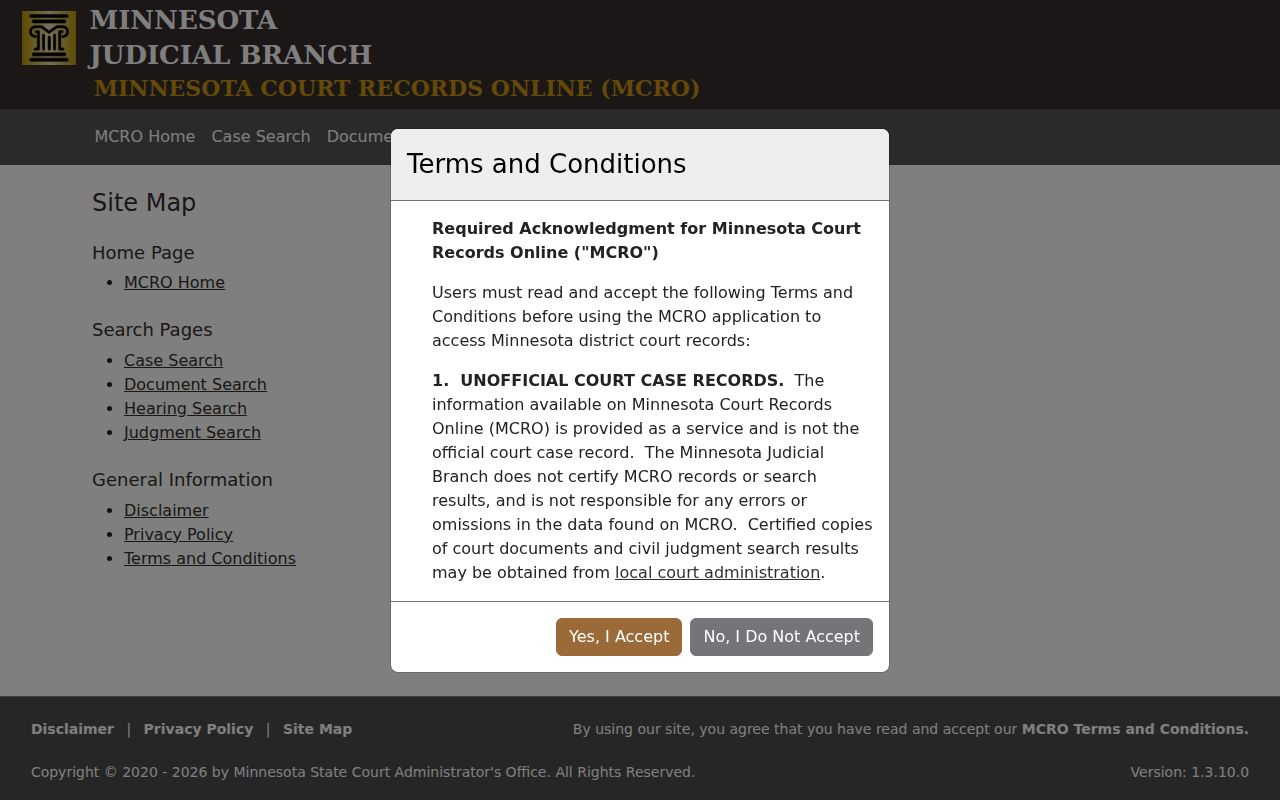
Use the full case or citation number when it is known. MCRO accepts the complete number with or without dashes or leading zeros, but without spaces. Name search is exact by default. Try the name with and without a middle name or initial, then use a wildcard after two characters or Sounds Like. Those two options cannot be combined.
- Case number and case type identify the matter.
- Court location and party role help separate similar names.
- Filing date and Register of Actions place events in time.
- Public documents and hearings remain subject to access limits.
Note: Pending criminal, traffic, and petty-misdemeanor cases without a conviction do not appear in remote defendant-name Case or Hearing Search results.
Compare Names Before a Ramsey County Resident Lookup
The same-name trap is common in Ramsey County. Compare an age or year-of-birth clue, address, spouse, parcel, county, and the date of an event before treating two hits as one person. Names, aliases, and birthdates may overlap. A court clerk can explain how to request a certified file or verify a case number, but private facts are not supplied by phone. Party street addresses and comment fields are excluded from MCRO remote results, and protected case types require their own access route.
The separate Minnesota Public Criminal History Search is the BCA channel for criminal-history verification.
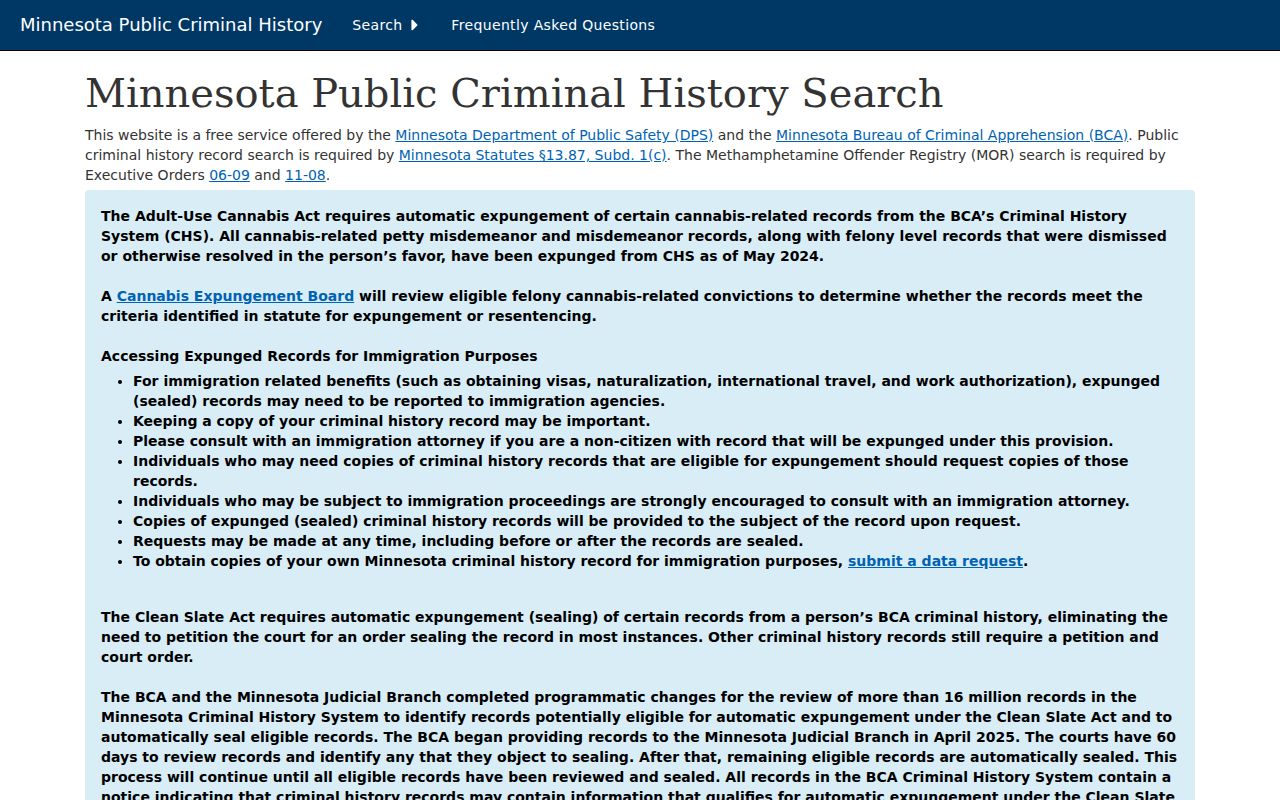
That system is distinct from a name-only court search and provides a different verification path. MCRO itself is unofficial. Ramsey courthouse public-access terminals can search statewide electronic records and locally stored paper records more broadly than remote MCRO. Certified court copies and judgments come from court administration, not from a screen result.
Confirm a Ramsey County Resident Lookup Across Records
One careful sequence is to anchor a name to a known address and then test the match. MapRamsey or the property lookup can supply a parcel, legal description, tax name, and mailing address. A recorded deed may then connect that name to a transfer. MCRO, a vital index, or a public credential record can be used only to test a separate fact. A parcel owner, a mailing addressee, and a current occupant are not automatically the same person.
- Search the address or known tax name and save the situs address, parcel or PIN, tax name, and date checked.
- Use the legal description or current owner's acquisition instrument in the recorder index when ownership is the question.
- Search MCRO with the exact name first, then the documented name variants, and compare case location and party role.
- Use a vital index, MOMS marriage index, probate file, or board record only to confirm the relevant event or affiliation.
- Request a certified copy from the court or vital-record custodian only when an official copy is needed.
- Docket
- The dated sequence of filings, hearings, and court events in a case.
- Index versus image
- An index points to a record or result; an image is a view of the filed or recorded document and may have separate access rules.
- Certified copy
- An official copy issued by the custodian, often with an attestation, seal, or certification process.
For a whole named street rather than one person, use the parcel-by-parcel method in the Ramsey County street directory. It retains the address focus instead of turning a one-person verification into a broad name list.
Ramsey County Vital-Record Routes
Ramsey County Department of Health Vital Records can issue local products, while the Minnesota Department of Health, or MDH, issues statewide birth and death products. Birth and death records dated 1900 to the present are available from vital-record offices. The Minnesota Historical Society's People Records Search has birth records from 1900 to 1934 and death records from 1904 to 2001. MNHS staff can search the statewide system at the Gale Family Library, and MDH has a death-index verification route for deaths from 1997 forward.
MDH's product and application information distinguishes discovery from obtaining a certificate. Certified birth copies cost $26, with $19 for each additional identical copy; noncertified birth records cost $13 and birth verification costs $9. Certified death copies cost $13, with additional identical copies at $6. Requests require the correct signed form, fee, identity or attestation, and an eligibility category under Minnesota Statutes section 144.225. Fees are nonrefundable, and MDH accepts mail or fax submissions, not emailed applications or in-person requests.
Marriage and divorce follow different paths. The Minnesota Official Marriage System is an index for most Minnesota marriages, while a marriage certificate comes from the county that issued the license. A divorce decree comes from the district court that granted it. Neither product should be confused with a general name-search result.
Business and License Clues in Ramsey County Records
A public business filing can establish an entity connection, not a person's current home address. The Minnesota Secretary of State result may show an entity name, filing status, registered office or agent, formation documents, assumed names, and listed officers or managers. Board verification is separate and board-specific; results can include a credential, status, issue or expiration information, public discipline, and contact fields where the board publishes them.
The Secretary of State business search is the entity layer for a careful cross-check.
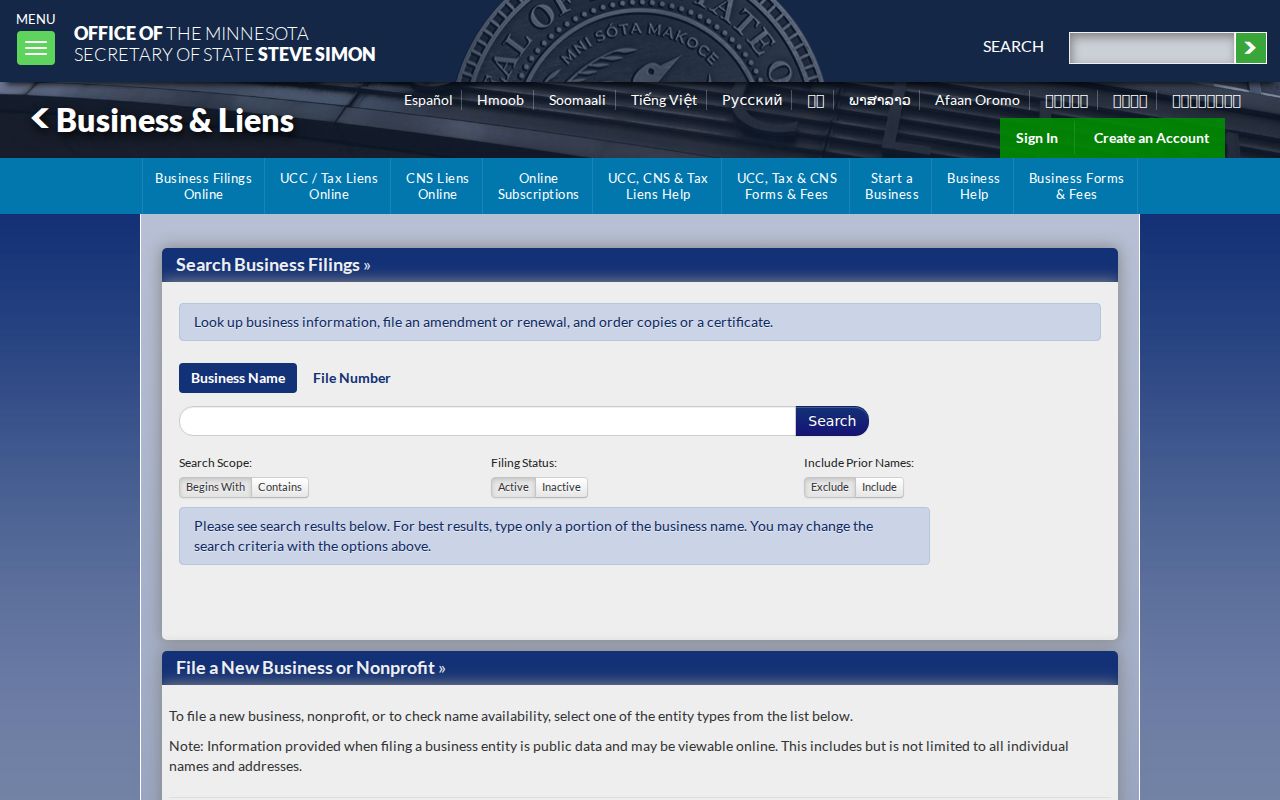
Match a filing name and date to the person before treating it as useful evidence. An entity's registered address can be an office or agent location.
The Minnesota boards and commissions directory leads to individual professional verification portals.
Use the named board's own result for credential questions, and preserve the status date with the result. Public affiliations can corroborate identity, but they do not replace a custodian-issued record.
When a Ramsey County Resident Lookup Ends at the Counter
An online miss is not always a record miss. Remote MCRO excludes several protected categories, while the courthouse terminal has broader electronic access. Older land material may require a recorder route, tract index, or library help. MNHS holds Ramsey civil case files from 1858 to 1902 and pre-1953 criminal files, and its staff can assist with archival research. For a deceased person, probate petitions, inventories, wills, affidavits, and court notices can identify a personal representative or heir when public portions are available.
A targeted request under the Minnesota Government Data Practices Act, Chapter 13 should identify the existing record, office, date range, person or parcel, and preferred format. Ask for the public portion and expect lawful redaction. When a record is wrong, seek correction through the assessor, elections office, vital-record amendment process, court procedure, or other custodian rather than reposting an error.
The Minnesota DOC individual and fugitive locator is a state custody and fugitive-search channel with its own limited purpose.
Its results are distinct from a general resident confirmation. A custody or fugitive locator does not establish a current Ramsey County address, identity across same-name records, or a court outcome.
Note: A complete case number, parcel PIN, document number, or event date gives a counter search a much clearer starting point.
Privacy Boundaries for a Ramsey County Resident Lookup
MNVotes lets a person check their own registration and voting information. A public voter information list is different. Under Minnesota Statutes section 201.091, an eligible requester identifies themselves and signs a declaration limiting use to elections, political activities, or law enforcement. The list can include specified public fields, but it cannot be sold, transferred, or republished as a searchable Internet list. Exact date of birth, email, and identification information are private.
| MNVotes field capture | Research status |
|---|---|
| Name | Text field; exact live requirement was not fully captured |
| Date of birth | Used for verification; not public |
| Address or county | Address or selection route for status and polling information |
| Search or submit | Returns confirmation and voting links |
Driver and vehicle address data are restricted under DPPA and Minnesota Statutes section 171.12. Courts protect victim, juvenile, domestic-abuse, and family details. Vital copies require eligibility and attestation. The Safe at Home program uses a designated legal address for enrolled people, while voter withholding and inactivation are separate options. A protected address is not a puzzle to work around.
Lawful use. A Ramsey County record check is for personal, lawful research and careful verification. Minnesota law can apply when records are used to stalk, harass, intimidate, or threaten another person.
Ramsey County's Official Path for Birth-Parent Research
Birth-parent research has a formal Minnesota route. Original birth record and post-adoption information requests use special MDH forms, eligibility rules, and adoption or confidential-intermediary procedures associated with Minnesota Statutes section 259.83. An informal index is not a substitute for that process. For family-history work that does not require a restricted record, MNHS, cemetery records, obituaries, newspapers, church or parish collections, and probate can provide independently sourced clues.
Begin with the official MDH form family, then use Gale Family Library and Ramsey County Historical Society material to place an event in time. That combination preserves the distinction between a genealogical lead and a legally controlled record.